
AI Will Not Magically Fix Your Customer Experience
Thinking about using AI to solve a customer experience problem? Think again.
bookmark_star Highlights
Executives face mounting pressure to "do something with AI." We’ve seen chatbots for faster service and generative AI promising efficiency gains. For many organisations, the business case feels compelling.
People often assume technology will improve customer experience by making everything faster and more efficient. This assumption underpins many organisations' AI strategies, and it's dangerous.
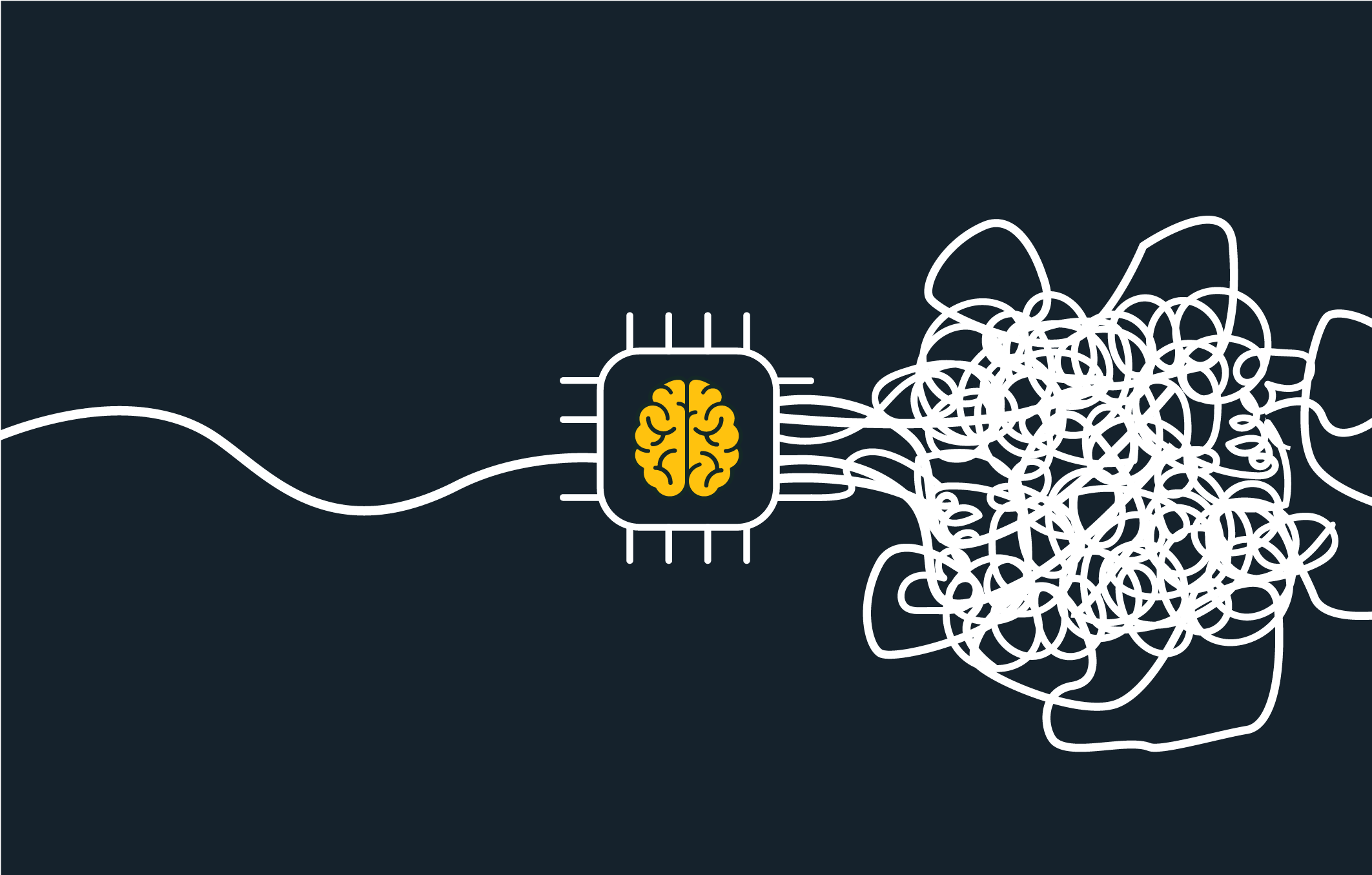
AI amplifies whatever experience currently exists. When that experience is fragmented, inconsistent, or poorly matched to customers' needs, AI will multiply those effects across every interaction.
The problem beneath the surface
Customer experience failures in high-trust industries share a common root cause: fragmented operating environments where siloed teams and misaligned objectives create friction.
Introducing AI into these environments amplifies three critical issues:
- Fragmented processes become more fractured. One team optimises workflows whilst another redesigns digital touchpoints, but no one owns the combined experience that matters to customers. AI pulls from contradictory sources and delivers inconsistent responses.
- Content contradictions at scale. Teams rewrite explanatory content locally rather than centrally, creating multiple versions of the same policy, procedure, or answer. AI surfaces whichever version it finds first, regardless of accuracy or currency.
- Emotional, high-stakes interactions become transactional. AI removes the human touch from moments that require empathy and understanding. Customers feel like transactions instead of real people.
Why this matters
Consider a customer in genuine distress: a rejected insurance claim, a worrying health test result, or difficult making a mortgage payment. The customer reaches out through a chatbot, typing something like, "I think something is wrong" or "I can't pay."
Basic AI treats this as a straightforward task and routes the customer to a form, or directs them to a help article. This interaction requires acknowledgment and appropriate human escalation. Basic AI fails because it optimises for transactional efficiency, and in doing so misses vital context.
AI operates within your systems, inheriting their dysfunction along with their strengths.
Four imperatives for AI that enhance customer experience
If your organisation is deploying AI, make sure you have these four foundational capabilities in place first:
1. Fix the foundation first
AI scales what your operating model supports. Deploy it into a fragmented environment and it multiplies confusion.
Succeeding with AI starts with fixing underlying issues in your organisation and customer experience. This varies for every organisation but often involves:
- Aligning teams around customer value
- Improving how you handle high-stakes moments
- Refining processes and documenting business rules and decision frameworks
Fixing these foundations before you apply technology allows you to leverage AI strategically, with greater likelihood of success.
2. Master trust sensitivity
Not all interactions can be automated equally. Instead, map every customer moment by its emotional weight and retain a human touch where trust is most at risk.
In short: automate the transactional, augment the relational.
Defining moments in your customer relationship require human involvement. This includes:
- Insurance claim rejections
- Healthcare diagnoses
- Conversations about hardship
- Fraud or cybersecurity notifications
3. Build intent-aware AI
Basic AI optimises solely for task completion. It identifies what customers are trying to do and executes quickly. This works in many cases but can damage your customer relationship at high-stakes moments.
Intent-aware AI recognises emotional context first. It asks why customers are reaching out before determining how to respond.
This difference can lead to dramatically different outcomes. When someone contacts you about a rejected claim, an unpaid bill or a declined application, they are signalling distress. They need an appropriate response that acknowledges their situation, gathers context, and responds accordingly.
Intent-aware AI is about prioritising understanding over speed, because customers fundamentally want to feel listened to. This builds trust.
4. Leverage explainability as a competitive advantage
Fast, unexplained decisions destroy trust across every sector.
Why did my premium increase? Why was this treatment pathway chosen over alternatives? Why was my credit limit reduced?
These questions demand emotionally intelligent, plain language answers. Customers need to understand not just what was decided, but:
- Why it happened
- How the decision was made
- What happens next
Transparency matters more than speed. Organisations that translate algorithmic logic into clear, explainable outputs will retain customers. This is particularly important as customer AI agents are already making switching between providers increasingly frictionless.
Looking forward
Imagine your customer is shopping around. With the help of an AI personal shopper, they find multiple competitors offering your products and services at a much lower price.
When every alternative is easily discoverable, competing on price alone becomes increasingly difficult. Price is comparable across providers, but experience isn't.
The true differentiator will be how you handled an important moment when it counted:
- The insurance claim you resolved without burdening the customer
- A diagnosis delivered with clarity and empathy
- The financial hardship call that left the customer with a renewed sense of agency and hope.
Is your organisation's foundation AI-ready?
If AI has a role in every high-stakes customer moment, which version of your service do you want to amplify: your best, most empathetic service, or your worst, most fragmented failures?
The decision to deploy AI depends entirely on fixing existing dysfunction. We can help you prepare your strategy, whether you're diagnosing fragmented operational alignment or planning your highest-value deployments.
Are you ready to start this conversation? Get in touch with our team.
Published
6 January 2026
Written by
Raj Mendes
Megan Crawford
Keep reading



Ready to transform your customer experience?
Speak directly with our team of experts to explore your challenges, opportunities and needs.


